£0.99
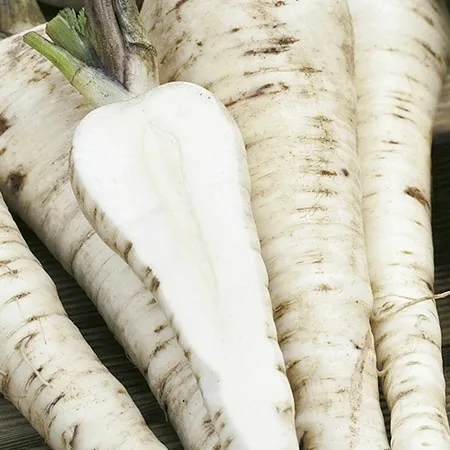
An outstanding hybrid variety which produces high yields of smooth, uniform, very white roots. Shallow crowns and wedge bayonet shape. Intermediate canker resistance. A multi purpose variety, ideal for pre-pack work. Maincrop variety, suitable for cropping between mid September and early April. Parsnips are not fussy about what soil types they grow in.
For all plants that have deep-growing roots as the parsnip and if you wish to grow the long, ‘perfect’ looking parsnip, you will need deep soil, that has recently been manured and is stone free. If parsnips hit a stone while growing they tend to fork.They grow best in a light, rich soil. A generous amount of compost or humus in some other form, incorporated in the soil will help provide soil aeration and a uniform distribution of moisture, besides the source of food supply for the plants.
Approximately 20 Seeds
Sowing & Growing
Sow February to May, Parsnip seeds have a very short vitality; fresh seed should be secured each year. If you are going to sow as early as February or March, you may wish to warm the soil with cloches or similar, leaving them in place until the seedlings have developed two true leaves. Sowings made in late March to early May should not need a cloche.
Parsnip germination rates can be low and seeds germinate slowly. It can be difficult to get a full row of seedlings. However, once parsnips have germinated they are really easy to grow. Soaking the seed overnight may help to hasten germination.
Direct Sowing; Sow three or four seeds at 15cm (6in) intervals, 13mm (0.5in) deep in rows 25 to 30cm (10 to 12in) apart. When the seedlings are about 2.5cm (1in) high thin out to leave one seedling per 15cm (6in) station. Don’t leave this job long as they need room to grow. It is wise to mulch the rows after planting as the soil must remain cool and moist during the germination period when the seeds are in danger of drying out. Water regularly.
Weed using a hoe or by hand but be careful not to disturb the young seedlings. You may also consider planting radish seed along with the parsnips; they will mark the row and keep the crust from hardening, making life a little easier for the parsnip pushing through. As the radishes become of edible size, use them and weed and thin the parsnip seedlings to stand 6 inches apart.
An “alternative” method! Parsnip seeds take a relatively long time to germinate, around six weeks, and in this time there are many variables that can affect their viability – particularly drought or water logging and the wide fluctuations we can have in spring from below zero to double figures Celsius compound the difficulties. Then, of course, there are pests!
To improve germination results, try sowing into cardboard cylinders. This method enables us to more closely monitor temperature and moisture levels during germination and avoids the difficulty of disturbing the long root of the parsnip. Collect the cardboard tubes from toilet rolls or make newspaper cylinders made by wrapping newspaper around a brush stave, secure with tape. Fill with compost, stand in a plastic box and moisten.
Sow three or four seeds into each cylinder and cover with a little more compost. Keep watered in an unheated greenhouse until germination. Allow only the strongest plant in each cylinder to grow on. Once the little plants have established themselves, dibber the cardboard cylinders into the bed that will be their home until harvesting.
Harvest mid September to early April, the tops will die down once the parsnips are ready to be harvested (late October) however it is traditional to wait until after the first frost to harvest, it is said to improve the flavour. Use a fork to carefully lift them. Don’t harvest all of them immediately; the best method of storage is to leave them in the ground, but lifting a few extra in November will ensure you still have parsnips to eat even if the soil is frozen.Harvesting can continue right up until early April. In spring dig as needed until new tops start to grow, then dig all that remains and store them in a cold place to prevent sprouting. After the growth of new tops begins, the roots lose flavour.
| Packet Size | Approximately 20 Seeds |
|---|
I have just bought all my new seeds for next year’s vegetables after having such great results this year. Budget seeds are so helpful, I’m a newbie in the veg growing world and they have been helpful in choosing the best seeds to start with etc. also much cheaper than elsewhere so if I do mess up in the future it isn’t costing me so much. I thoroughly recommend Budget Seeds for all your veg and flower seeds.
Mrs Morris