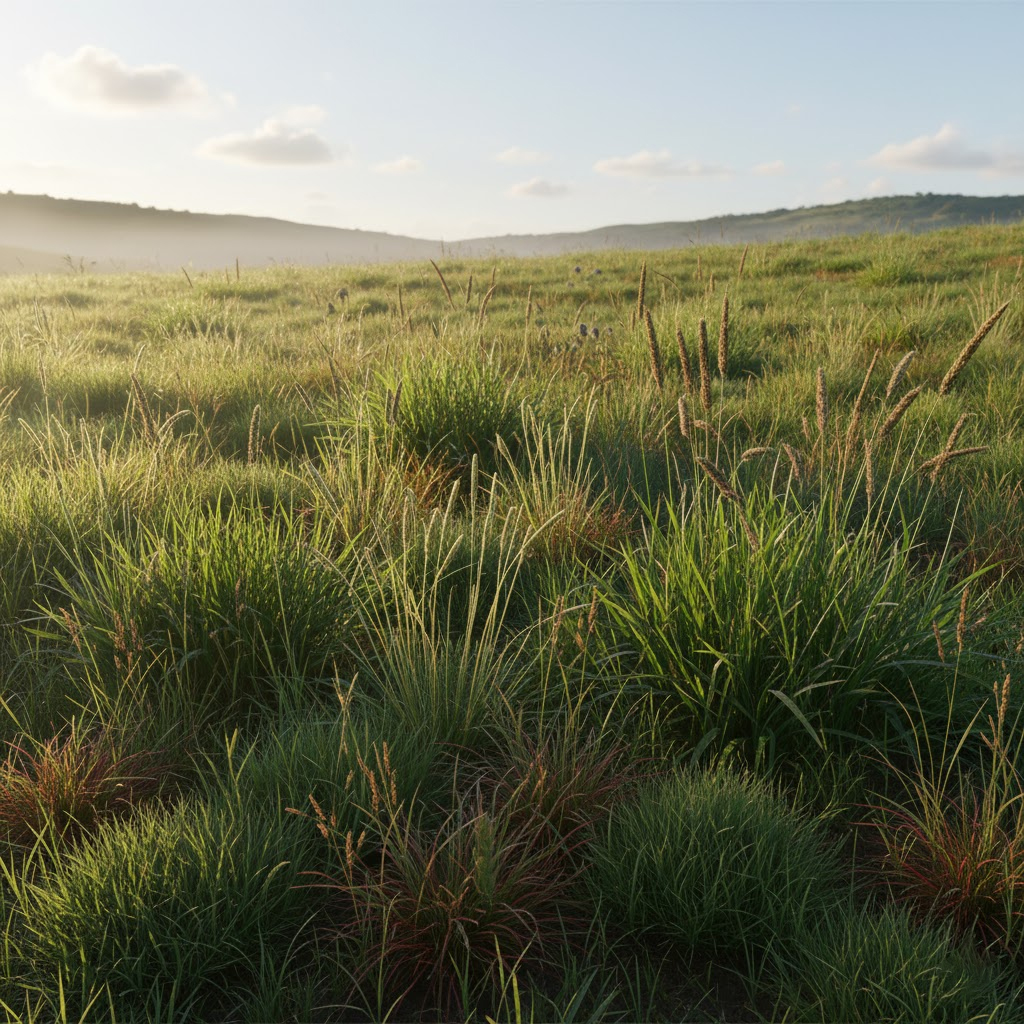
Starting at £40.00
Please Note; These mixes are intended for farmers and land managers, rather than home gardens. As such, it is not possible to mix in smaller quantities and is intended to be sold, to cover acres and hectares. If you do require smaller amounts, please Email us first on info@budgetseeds.co.uk.
Option 1 £5.00 per Kg
Sowing; 8Kg per hectare
15.00% Timothy, 15.00% Hard Fsc, 25.00% Tall Fsc, 25.00% Strong CRF, 20.00% Chewings Fsc
Option 2 Light Soils £6.20 per Kg
Sowing; 8Kg per hectare
10.00% Sheeps Fsc, 5.00% Crested Dogstail, 5.00% Highland Bent, 25.00% Slender CRF, 20.00% Tall Fsc, 15.00% Timothy, 20.00% Chewings Fsc
Option 3 £7.20 per Kg
Sowing Rate; 20Kg per hectare
15.00% Timothy, 25.00% Tall Fsc, 32.00% Slender CRF, 15.00% Highland Bent, 10.50% Crested Dogstail, 2.50% Meadow Foxtail
3 years
£151 per hectare (ha) per year
This action’s aim is that there’s grassland which produces a sward with:
The purpose of this is to:
You can do this action on agricultural land located below the moorland line that’s:
| Eligible land type | Eligible land cover | Compatible land use code |
|---|---|---|
| Temporary grassland | Arable land | TG01 |
| Improved and low input permanent grassland | Permanent grassland | PG01 |
| Land or features with protection | Eligibility |
|---|---|
| Sites of special scientific interest (SSSIs) | Eligible – you must get SSSI consent before you do this action (read section 10.3 ‘SSSI consent’ in the SFI scheme information to find out how to do this) |
| Historic and archaeological features | Eligible – you must get a SFI HEFER before you do this action (read section 5.6 ‘Land with historic or archaeological features’ in the SFI scheme information to find out how to do this) |
Total available area in a land parcel, apart from if CIGL1 (take grassland field corners or blocks out of management) is located in the same land parcel. In this case CLIG3 can be on part of the available area.
This action is static. This means you must do it at the same location each year of this action’s duration.
You must minimise the use of nutrient inputs on the grassland entered into this action by applying no more than either:
You must also do the following on the grassland:
There must be an intact grass sward throughout the year, without compacted areas or poaching. You can carry out supplementary feeding of livestock on the grassland, but you must make sure this does not cause poaching.
You must not do the following on the grassland:
If you cut the grassland for conserved forage, you must:
After you’ve cut the area for conserved forage, you must manage it in a way that can reasonably be expected to achieve this action’s aim.
If you’re already managing grassland with very low nutrient inputs, you can use it to get paid for this action if it:
You must do this action each year of its 3-year duration.
It’s up to you how you do this action, as long as you:
You may find it helpful to read the ‘advice to help you do this action’, but it’s not part of this action’s requirements.
You must keep evidence to show what you’ve done to complete this action, such as:
If it’s not clear that you’ve done this action in a way that could reasonably be expected to achieve its aim, we may ask for this evidence. You must supply the evidence if we ask for it.
You can do the following actions or options on the same area in a land parcel as this action.
Some actions or options can only be done on the same area if they’re done at a different time of year to this action. For example, winter cover followed by a summer companion crop. Read ‘What to do’ and ‘When to do it’ to find out when this action must be done.
| Scheme | Action or option codes |
|---|---|
| SFI 2024 actions | OFC1, OFC2, OFM1, OFM2, AGF1, AGF2, PRF2, CIPM1, CNUM1, CSAM1 |
| SFI 2023 actions | IPM1, NUM1, SAM1 |
| CS options | OR1, OR2, OT1, OT2, SW15, SW16 |
| ES options | No ES revenue options |
| SFI pilot standards | No area-based SFI pilot standards |
If an action or option cannot be located on the same area, you may be able to do it on a different area in the same land parcel. Read section 6 ‘Eligible land in other funding schemes’ in the SFI scheme information for more details.
You can do one of the following supplemental actions (unless indicated otherwise) on land entered into this base action:
You can do the following actions or options on the eligible boundaries of a land parcel entered into this action:
The following advice may help you to do this action, but it’s not part of this action’s requirements.
To help you plan how to manage the grassland with very low nutrient inputs, you may find it helpful to do CNUM1 (assess nutrient management and produce a review report).
If you’re already managing the grassland with very low nutrient inputs (below the thresholds required by this action), try not to increase inputs above your current levels.
To get the most environmental benefits, you can choose to remove all nutrient inputs. You can use well-rotted farmyard manure to replace nutrients lost by cutting and removing hay or haylage.
Make sure you follow the farming rules for water. These require you to take steps to stop manure, fertiliser or soil getting into waterbodies and watercourses.
It’s up to you how you graze or cut the grassland, as long as it:
If you’re grazing the grassland (and not cutting it for conserved forage), you can do the following to help you achieve this action’s aim:
You can increase the benefits for wildlife by leaving a longer sward through the summer and following winter. For example, you can maintain a higher average sward height of around 8cm or more, with:
To find out more about measuring swards and planning how to manage grazing, read AHDB’s guidance on planning grazing strategies for better returns.
If you’re cutting the grassland, but it’s not for conserved forage, you can do the following to help you achieve this action’s aim:
If possible, you can remove the cut vegetation to help:
If it’s impractical to remove the cut vegetation, you can leave finely chopped cuttings, spread as thinly as possible.
If you’re cutting the grassland for conserved forage, you can do this after the plants have flowered and set seed. This will usually mean cutting from around either:
Before cutting, check for signs of nesting birds. Birds, nests and eggs are protected by law, so if you see signs of nesting birds, delay cutting until the birds fledge.
After you have cut for conserved forage, you can graze the aftermath or take a second cut in late summer or early autumn and remove the cuttings.
To minimise bare ground and reduce the risk of compacted areas or poaching, you can consider doing some or all of the following, as relevant:
| Mix | Option 1 per Ha | Option 2 Light Soils per Ha | Option 3 Wetter Areas per Ha |
|---|
I have just bought all my new seeds for next year’s vegetables after having such great results this year. Budget seeds are so helpful, I’m a newbie in the veg growing world and they have been helpful in choosing the best seeds to start with etc. also much cheaper than elsewhere so if I do mess up in the future it isn’t costing me so much. I thoroughly recommend Budget Seeds for all your veg and flower seeds.
Mrs Morris