Starting at £0.39
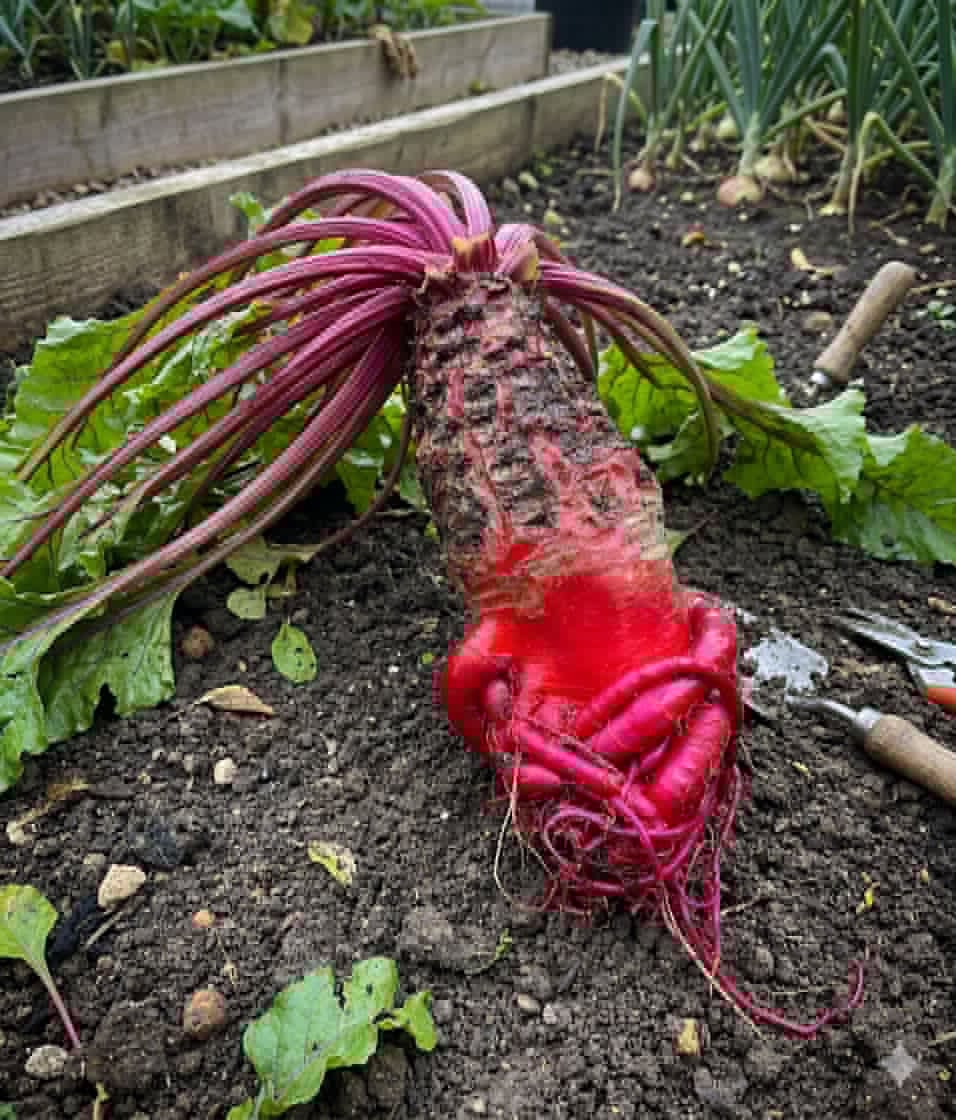
The Mangelwurzel ‘Mammoth Red’ (also commonly called Mammoth Long Red) is a heritage cultivar of Beta vulgaris, the same species as common beetroot, sugar beet, and Swiss chard. Historically grown as a high-yield fodder crop for livestock, it has seen a recent resurgence in popularity among home gardeners as a versatile, dual-purpose vegetable.
Appearance: It produces massive, long, cylindrical roots with dark red skin and white or red-tinted flesh. They are known for growing partially out of the ground, making them relatively easy to harvest.
Size: The roots are famous for their size and can reach impressive weights—sometimes up to 10–20 pounds under ideal conditions—though they are typically harvested smaller for culinary use.
Flavor: Compared to standard beetroot, they are often described as less “earthy” and sweeter due to their high sugar content (up to 20%).
Edibility: Both the roots and the large, chard-like leaves are edible.
Roots: When harvested young, they are tender and can be eaten raw, boiled, mashed, or roasted. Larger, older roots are traditional staples for stews, soups, and curries.
Leaves: These are highly prized and can be prepared exactly like spinach or Swiss chard; they are often noted for remaining sweet even during the heat of summer when other greens might turn bitter.
Other: Due to their high sugar content, they have a long history of being used in home brewing to make country wines and ales.
Climate: They prefer cool-temperate climates and are generally hardy, though they are susceptible to damage from hard frost.
Soil: They thrive in deep, well-drained, fertile soil. Because they produce deep roots, they are excellent at breaking up compacted soil in new garden plots.
Care: They are considered easy to grow for beginners. They require consistent moisture to prevent the roots from becoming woody and benefit from regular weeding.
Sowing: Usually sown in spring (April–June) directly into the garden. Thin seedlings to ensure the roots have enough space to reach their full potential (typically 12–18 inches apart).
| Amount | 20 Seeds | 10g | 50g | 100g |
|---|
I have just bought all my new seeds for next year’s vegetables after having such great results this year. Budget seeds are so helpful, I’m a newbie in the veg growing world and they have been helpful in choosing the best seeds to start with etc. also much cheaper than elsewhere so if I do mess up in the future it isn’t costing me so much. I thoroughly recommend Budget Seeds for all your veg and flower seeds.
Mrs Morris