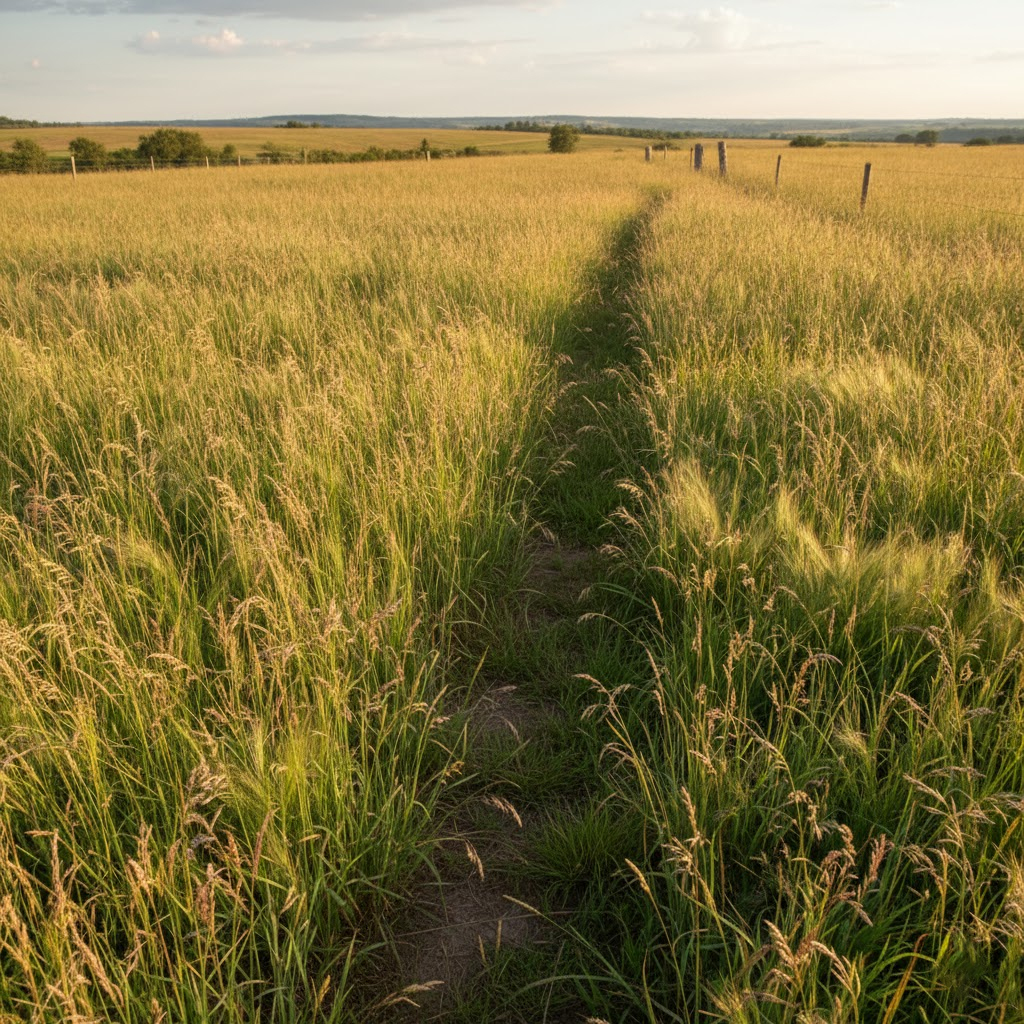
Starting at £5.00
Please Note; These mixes are intended for farmers and land managers, rather than home gardens. As such, it is not possible to mix in smaller quantities and is intended to be sold, to cover acres and hectares. If you do require smaller amounts, please Email us first on info@budgetseeds.co.uk.
Option 1 £5.00 per Kg
Sowing; 20Kg per hectare
15.00% Timothy, 15.00% Hard Fsc, 25.00% Tall Fsc, 25.00% Strong CRF, 20.00% Chewings Fsc
Option 2 Light Soils £6.20 per Kg
Sowing; 20Kg per hectare
10.00% Sheeps Fsc, 5.00% Crested Dogstail, 5.00% Highland Bent, 25.00% Slender CRF, 20.00% Tall Fsc, 15.00% Timothy, 20.00% Chewings Fsc
Option 3 Heavy Soils £7.20 per Kg
Sowing Rate; 20Kg per hectare
15.00% Timothy, 25.00% Tall Fsc, 32.00% Slender CRF, 15.00% Highland Bent, 10.50% Crested Dogstail, 2.50% Meadow Foxtail
3 years
£515 per hectare (ha) per year – calculate the hectarage by:
This action’s aim is that there’s a grass buffer strip:
The purpose of this is to:
You can do this action on agricultural land located below the moorland line that’s:
| Eligible land type | Eligible land cover | Compatible land use code |
|---|---|---|
| Arable land used to grow crops | Arable land | Land use codes for arable crops or leguminous and nitrogen-fixing crops |
| Temporary grassland | Arable land | TG01 |
| Arable land lying fallow | Arable land | FA01 |
| Permanent crops – horticultural | Permanent crops | TC01 |
| Protected land | Eligibility |
|---|---|
| Sites of special scientific interest (SSSIs) | Eligible – you must get SSSI consent before you do this action (read section 10.3 ‘SSSI consent’ in the SFI scheme information to find out how to do this) |
| Historic and archaeological features | Eligible – you must get a SFI HEFER before you do this action (read section 5.6 ’Land with historic or archaeological features’ in the SFI scheme information to find out how to do this) |
Part of the available area in a land parcel.
This action is static. This means you must do it at the same location each year of this action’s duration.
You must establish and maintain a grass strip on land entered into this action that’s:
The grass strip must buffer an existing landscape feature, or certain heritage features, such as:
You can also locate the grass buffer strip next to:
You must make sure the grass strip is in addition to any regulatory requirements relating to buffer strips.
Once the grass strip is established, you must manage it in a way that can reasonably be expected to achieve this action’s aim.
During late summer, after the bird breeding season, you must cut part of the grass strip’s width next to the edge of the crop or fallow land. You must do this along as much of the strip’s length as possible. This is to provide some shorter vegetation and a range of habitat types.
You must not do any of the following on the grass buffer strip once it’s established:
You can maintain an existing grass buffer strip to get paid for this action if it:
You must:
It’s up to you how you do this action, as long as you:
You may find it helpful to read the ‘advice to help you do this action’, but it’s not part of this action’s requirements.
You must keep evidence to show what you’ve done to complete this action, such as:
If it’s not clear that you’ve done this action in a way that could reasonably be expected to achieve its aim, we may ask for this evidence. You must supply the evidence if we ask for it.
You can do the following actions or options on the same area in a land parcel as this action. Some actions or options can only be done on the same area if they’re done at a different time of year to this action. For example, winter cover followed by a summer companion crop. Read ‘What to do’ and ‘When to do it’ to find out when this action must be done.
| Scheme | Action or option codes |
|---|---|
| SFI 2024 actions | OFC3, OFC4, OFC5, OFM4, OFM5, OFM6, AGF1, AGF2, PRF2, CIPM1, CNUM1, CSAM1 |
| SFI 2023 actions | IPM1, NUM1, SAM1 |
| CS options | OR3, OR4, OR5, OT3, OT4, OT5 |
| ES options | No ES revenue options |
| SFI pilot standards | No area-based SFI pilot standards |
If an action or option cannot be located on the same area, you may be able to do it on a different area in the same land parcel. Read section 6. ‘Eligible land in other funding schemes’ in the SFI scheme information for more details.
You can do the following actions or options on the eligible boundaries of a land parcel entered into this action:
The following advice may help you to do this action, but it’s not part of this action’s requirements.
You can establish the grass buffer strip by either:
This action explains:
You are required by law to have 2m buffer strips next to hedgerows. This means you need to establish the 4m to 12m wide grass strip at least 2m from the centre of a hedgerow. Read the guidance on Hedgerow management rules: buffer strips to understand how these rules apply to you.
To help you decide where to locate the grass buffer strip, you may find it helpful to do CSAM1 (assess soil, produce a soil management plan and test soil organic matter).
Sowing a seed mix can establish the grass buffer more quickly, which can reduce the risk of soil erosion.
You can choose a seed mix that contains native grass species, such as:
It can help the seeds to germinate if they’re sown into a seedbed that’s:
You can either:
If the soil is dry enough, rolling after you have sown the seeds can:
Your seed supplier can:
Using natural regeneration means the grasses in the buffer strip are local to your area. It can take longer to establish the buffer strip, but it may cost less.
To encourage the seeds that are already in the soil to germinate, you can cultivate the soil between spring and late summer.
Once the grass buffer strip is established, this action requires you to maintain it by managing it in a way that can reasonably be expected to achieve this action’s aim.
This action requires you to cut part of the grass strip’s width next to the edge of the crop or fallow land during late summer (after the bird breeding season).
It’s up to you how much of the buffer strip’s width you cut. Cutting up to half of the width from the edge of the crop or fallow land can help to provide:
You can stagger cutting, so you do not cut all your buffer strips at the same time. during late summer. This will usually mean there’s always habitat available for invertebrates and small mammals.
Where possible, remove the cut vegetation to limit weeds and reduce the risk of it smothering the flower species. If this is impractical, you can finely chop the vegetation to spread it as thinly as possible.
You may need to control weeds when they appear. To control weeds like docks, nettles, thistles and common ragwort, you can cut the affected area, providing there’s still an intact grass sward. This action also allows you to use herbicides to weed wipe or spot treat weeds.
| Mix | Option 1 per Kg | Option 2 Light Soils per Kg | Option 3 Wetter Areas per Kg |
|---|
I have just bought all my new seeds for next year’s vegetables after having such great results this year. Budget seeds are so helpful, I’m a newbie in the veg growing world and they have been helpful in choosing the best seeds to start with etc. also much cheaper than elsewhere so if I do mess up in the future it isn’t costing me so much. I thoroughly recommend Budget Seeds for all your veg and flower seeds.
Mrs Morris